Free Name Tracing Worksheets for Preschool
These free name tracing worksheets for preschool are set up the way three-to-five-year-olds need them: large print letters, only four or five rows, a solid example to look at and an empty line at the end to try on their own. Type the child's name below and the sheet appears at once. Print it, or download the PDF for later.
Why preschool name tracing worksheets look different
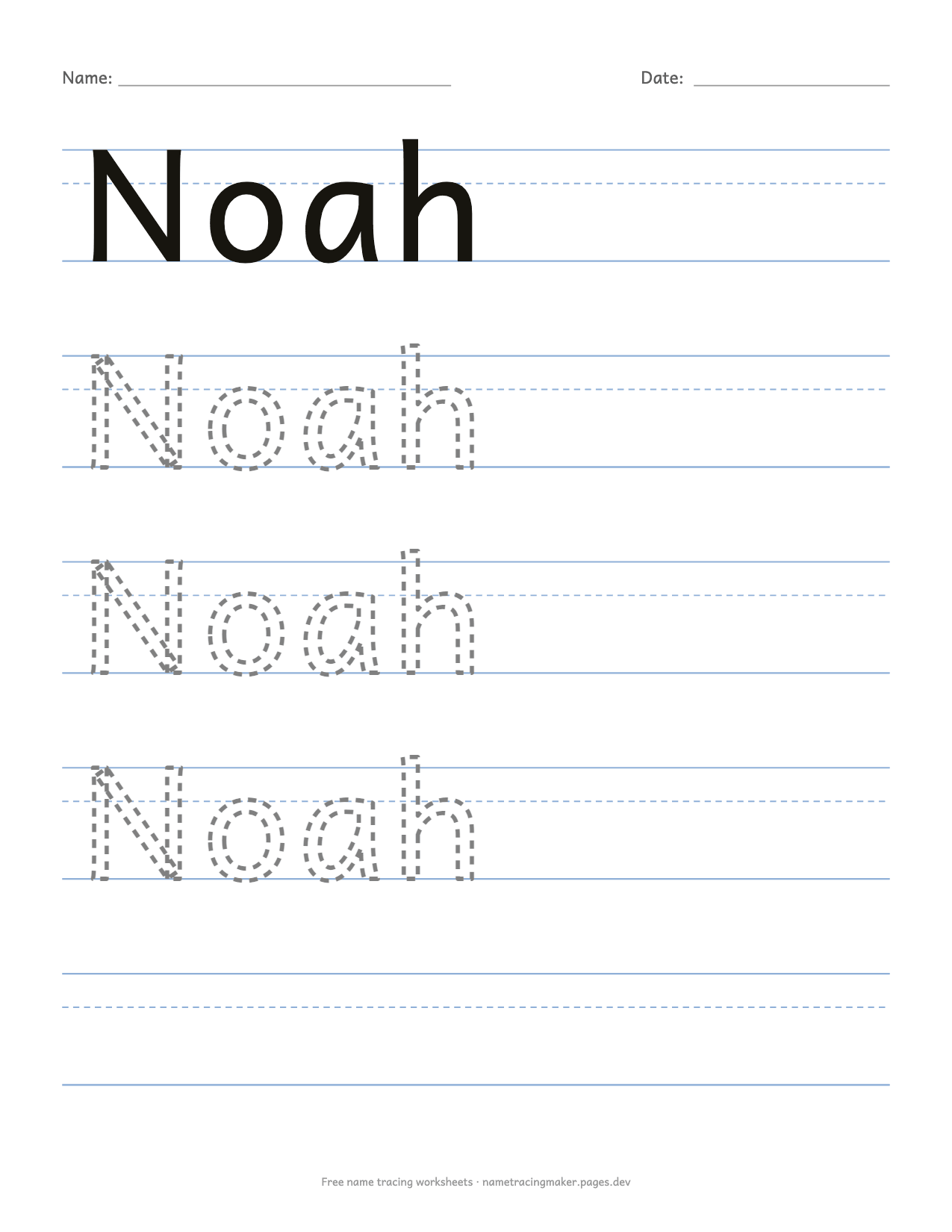
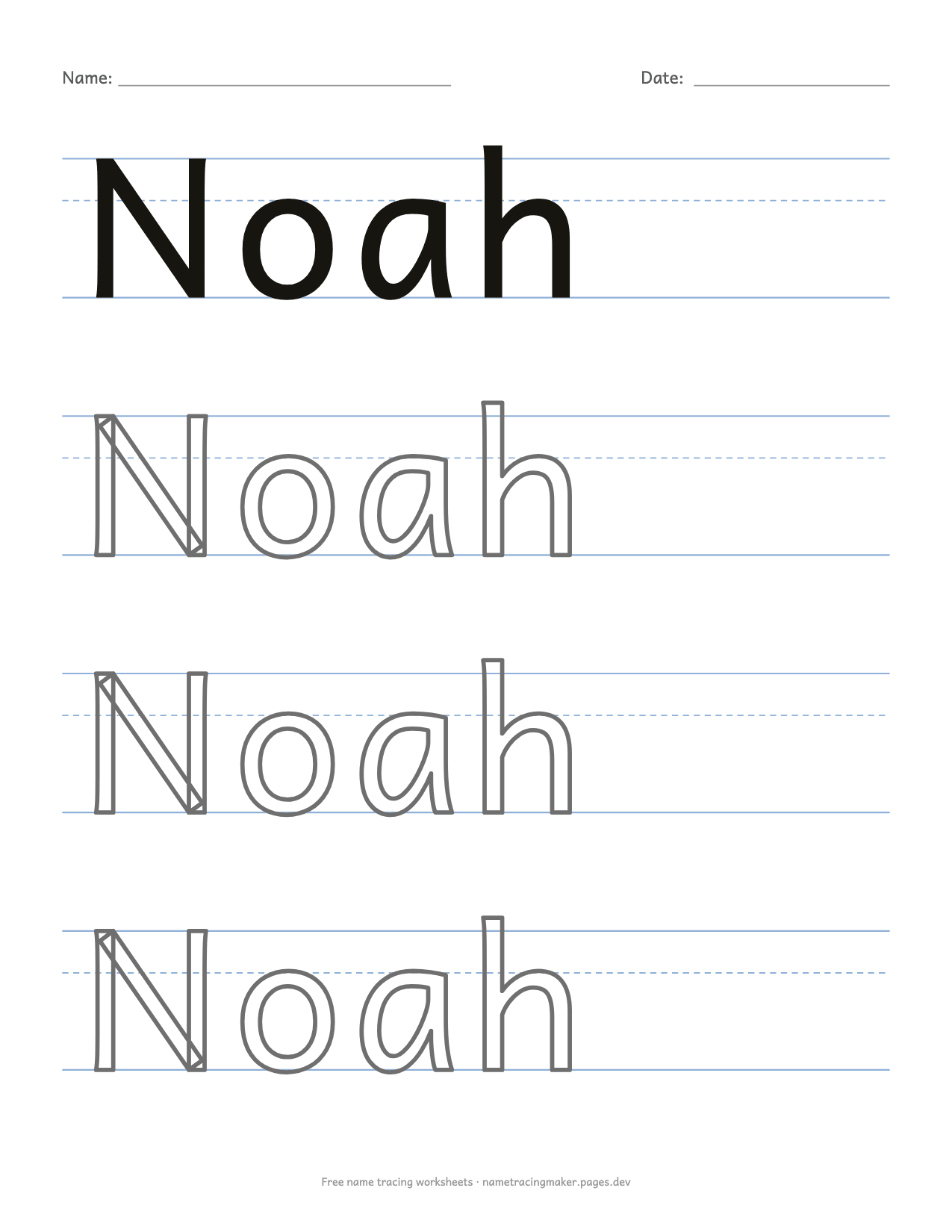
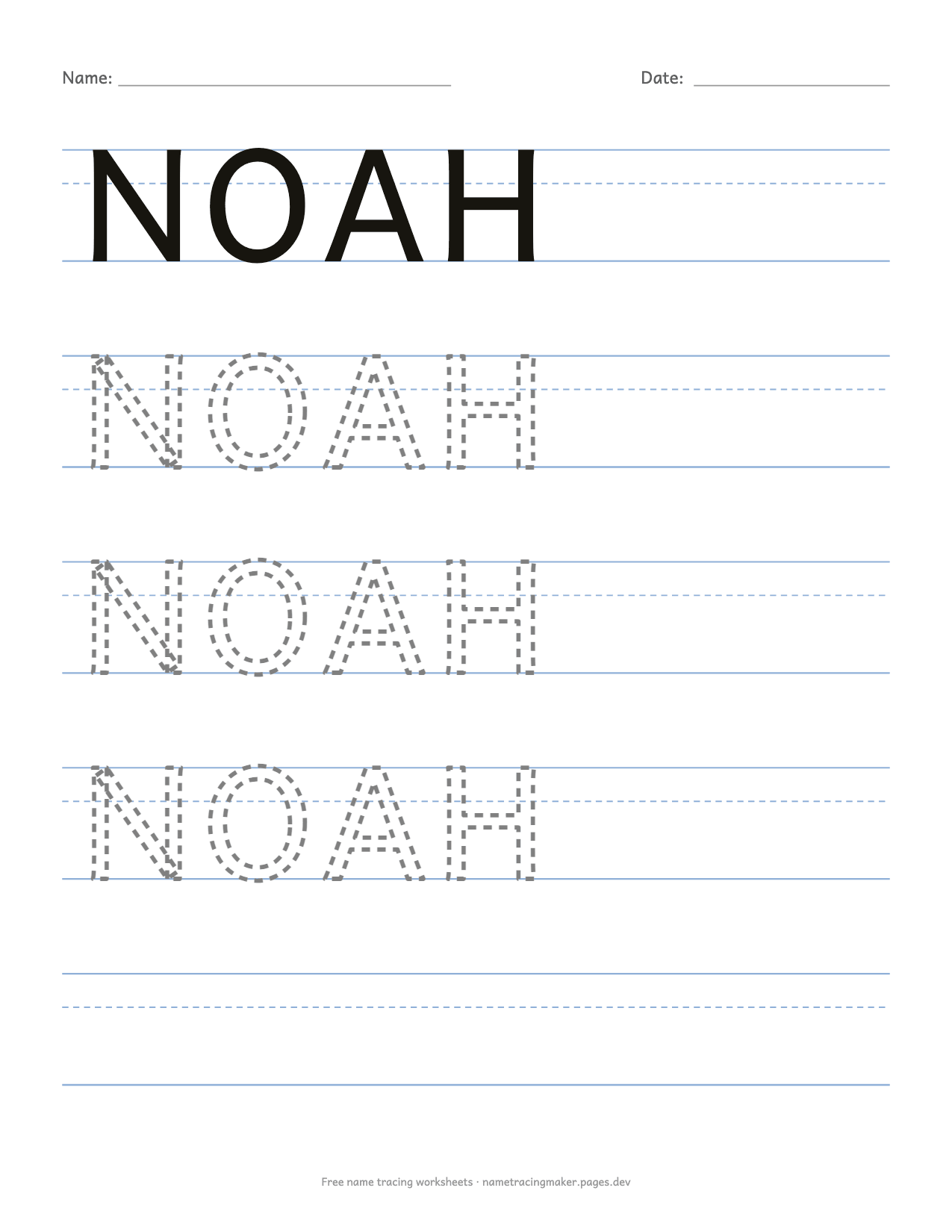
A worksheet made for a six-year-old is wrong for a three-year-old. Preschoolers are still building the hand control to stay inside a shape, so they need bigger letters, wider lines and far fewer rows. The settings above are chosen for that: five rows per page, which gives the largest letters the paper allows, a solid model row to look at, and an empty row at the bottom so the child can try the name once without any help. Change any of them and the preview updates at once.
The letters are plain print: upright, with a round single-storey a and a simple g, the same shapes a preschool or kindergarten teacher draws on the board. The dashed middle line sits exactly at the height of the small letters, so the child learns early that some letters are tall, some are small and some have tails.
How to use free name tracing worksheets for preschool at home
- Start with recognition, not writing. Print one sheet with hollow letters and ask the child to find the first letter of their name on it. Point out that it is the big one.
- Trace with a finger first. Finger tracing teaches the shape and direction of each letter without the frustration of controlling a pencil. Do it on the printed sheet, then in a tray of sand or salt, then with a crayon.
- Move to a crayon, then a pencil. Thick crayons and short, fat pencils are easier for small hands. Switch to dashed outlines when the child can stay roughly inside a hollow letter.
- Do one row at a time. A preschool session can be a single row. Stop while it is still fun. Four rows done over a week are a better result than four rows done in one tearful sitting.
- Use the empty row as a celebration. When the child writes their name on the empty row for the first time, keep that sheet. Dated sheets make a lovely record of progress across the year.
Settings teachers use for a preschool class
For a class set, type one name per line, keep print letters and dashed outlines, set five rows and download one PDF; every child gets a page with their own name in the same style. For the first weeks of the year many teachers choose hollow outlines and four rows, then move the whole class to dashed outlines and six rows after the holidays. For a child who is ahead, dotted outlines or light gray fill with an empty last row give a bigger challenge on the same paper.
Laminated sheets save printing: one copy per child in a plastic sleeve, traced with a dry-erase marker and wiped clean. Printing on card stock also helps when crayons are involved. For paper size, choose US Letter in North America and A4 elsewhere, and print at 100 percent so the rows stay the designed size.
The same generator is on the name tracing worksheets page, where you can also choose D'Nealian-style and cursive letters, and on the printable PDF page, which covers printing and saving in detail.
Before tracing: pre-writing strokes
If a child finds even hollow letters hard, step back to the strokes that letters are made of: straight lines down, lines across, circles and curves. Draw a few big ones on plain paper with a marker and let the child trace them with a finger and then a crayon. Playdough, tongs, stickers and tearing paper all build the finger strength that pencil control depends on. Come back to the name worksheet after a week or two of that and the letters will be easier.
Keep the sessions short and the praise specific: “you stayed on the line for the whole letter m” means more to a four-year-old than “good job”. The empty row at the bottom of each sheet is there for exactly that moment when the child wants to show you they can do it alone.
Every worksheet on this page is free, drawn in your browser and printed from your device. No sign-up, no watermark, and the name you type is not sent anywhere.
Questions parents and teachers ask
At what age can a child start tracing their name?
Most children begin to show interest in their name between three and four, usually by recognising the first letter. Start with finger tracing on a hollow-letter sheet and move to a crayon when the child can hold one comfortably. There is no fixed age; follow the child's interest and keep it playful.
Should preschoolers trace in capital letters or lowercase?
Trace the name the way it is normally written: a capital first letter followed by lowercase letters. Many preschoolers find all-capitals easier, but names written that way have to be relearned at school. Use the all-capitals setting only if the child's teacher asks for it.
How many rows should a preschool name tracing worksheet have?
Four or five. Fewer rows mean bigger letters, which is what small hands need, and a short page is finished before the child loses interest. The worksheets on this page default to five rows: one solid model, three tracing rows and one empty row.
Which handwriting style is right for preschool?
Plain print, unless the child's future school uses a slanted D'Nealian-style print. Cursive comes years later. The print letters here are simple ball-and-stick shapes with a single-storey a and g, the forms that preschool and kindergarten programmes teach.
Are these preschool worksheets free to print for my class?
Yes. Make as many as you need for your own children, your classroom or a childminding group. Type one name per line and download one PDF with a page for every child.